
Taking Responsibility
On the Anniversary of the U.S. Withdrawal From Afghanistan

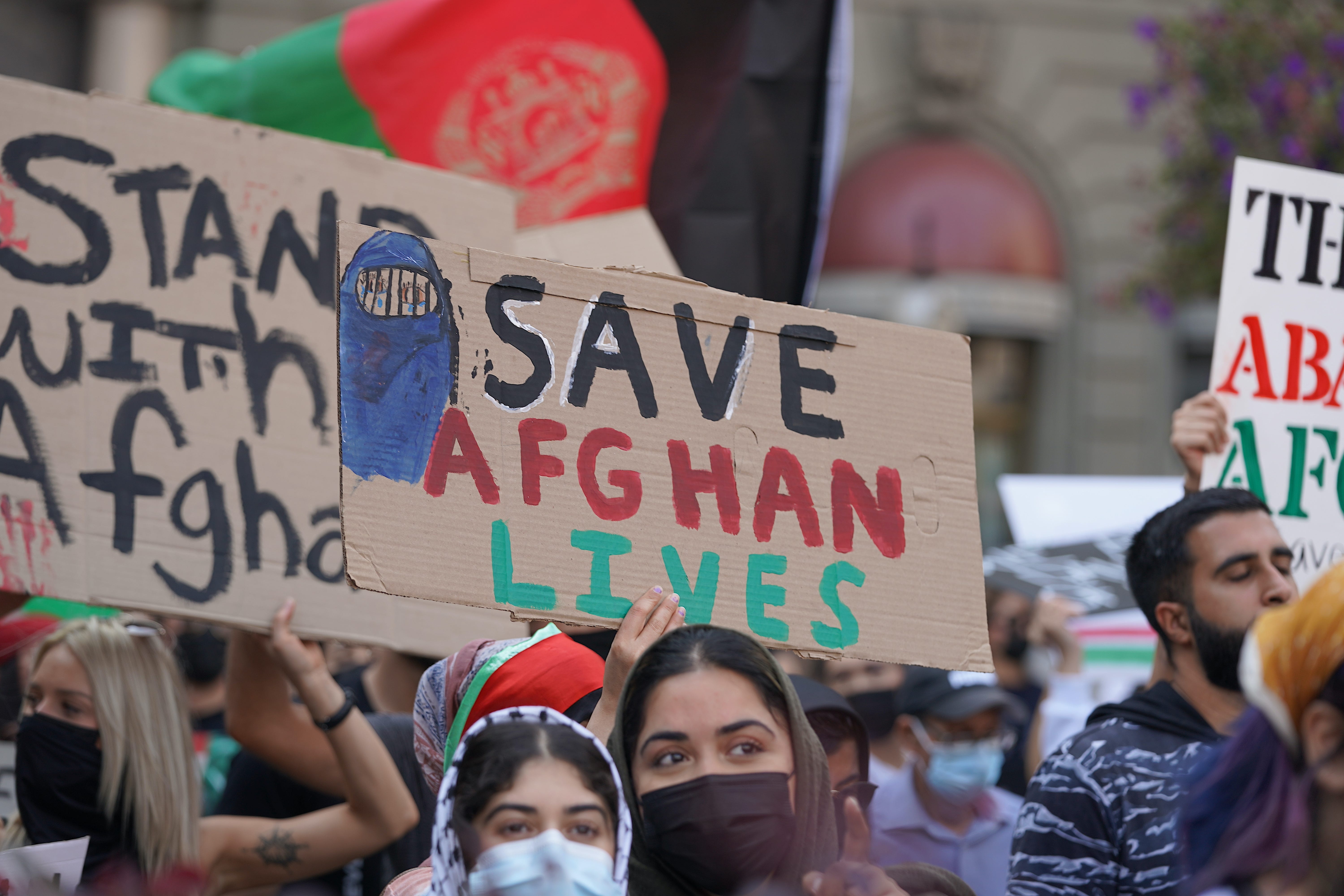
This essay was originally posted on Medium
Author’s note: One year ago I somehow found myself working with dear friends to help some at-risk Afghan families attempt to evacuate ahead of the U.S. withdrawal. Some of the families are now safely in the United States, some are currently in third party countries where they anxiously wait for approvals before their visas run out, and still others remain in Afghanistan, where they live in hiding. Since beginning these efforts, I’ve been fortunate to become part of the AfghanEvac Coalition, a group consisting of active and retired members of the U.S. military and civilian volunteers. Every day we continue our efforts to bring Afghans-at-risk to safety with hope and determination.
Over the last two weeks I’ve often found myself mulling over the strangeness of having spent the better part of a year living in an alternate universe. This was highlighted during a recent exchange of messages with an acquaintance about the solemn arrival of the anniversary of Kabul’s fall on August 15 when it seemed as if the person on the other end of the phone believed this date to be the only marker of all that had happened in the two weeks that followed. Reading this left me thoroughly confused. But the last U.S. plane left Afghanistan on the 30th! I thought. There are two solid weeks of coverage to go through.
The urgent feelings that welled up during that text exchange are a common reflex for those who spend a lot of time working around trauma…an experience I’ve been sharing with fellow AfghanEvac Coalition volunteers who work with at-risk people who were left behind. It was a sort of panic over the idea of others not realizing the importance of all that had happened one year ago. In that moment I wanted to hear people walking their dogs through my neighborhood saying Oh my! What have the women of Afghanistan endured for the last year? Why are so many interpreters who helped our military still stuck over there? Do we not owe them something for risking their lives for Americans? Honestly, this wish was less than rational.
The baseline level of daily stress Americans endure in 2022 is higher than it’s been in living memory. Every day we go out into the world wondering if we’ll catch some crazy strain of COVID, whether we should allow our children to attend football games for fear one of the gun threats called in to schools on a seemingly daily basis will come true. We wonder if there will be another insurrection and if inflation will light our budgets afire if they haven’t done so already. We have climate anxiety and suffer through mercilessly endless headlines about our former president. Of course people lack the additional bandwidth to process much more distressing news. Everyone feels it, and the general stress is doled out in a gross twist of equity that zaps some of the trite simplicity from the popular phrase a rising tide lifts all boats. Perhaps when thinking of this phrase we should also give closer consideration to the fact that no boat is unaffected by a great storm.
A great hurricane can cause substantial damage to a ship, but that vessel hasn’t a chance if it was never seaworthy. If the United States, young as it is in the scope of civilization, is a finely crafted ship, our partners and allies in Afghanistan have been left with an uncompleted version that still lacks the ability to float, and this is due in part to American policies and actions that swept their metaphorical tools and backstops away the moment warning sirens blared news of an oncoming storm. Sadly, this is far from the first time such a thing has occurred.
For 20 years the United States military was installed in this part of Central Asia to protect very real national security interests and — both overtly and inadvertently — willed our socio-political ideals onto Afghan society, following a centuries-old cycle dating back to around 500 B.C. I am not by any means implying any weakness in the Afghan culture. If anything, its survival through centuries of invasion is testament to it being richer and more resilient than most. There have been civilizations that have been wiped out by one or two cycles of external dominance, leaving little trace of their existence to be found in the thousands of years that followed. But, as we are all tied to a shared humanity, how many of such cycles can we allow one culture to endure?
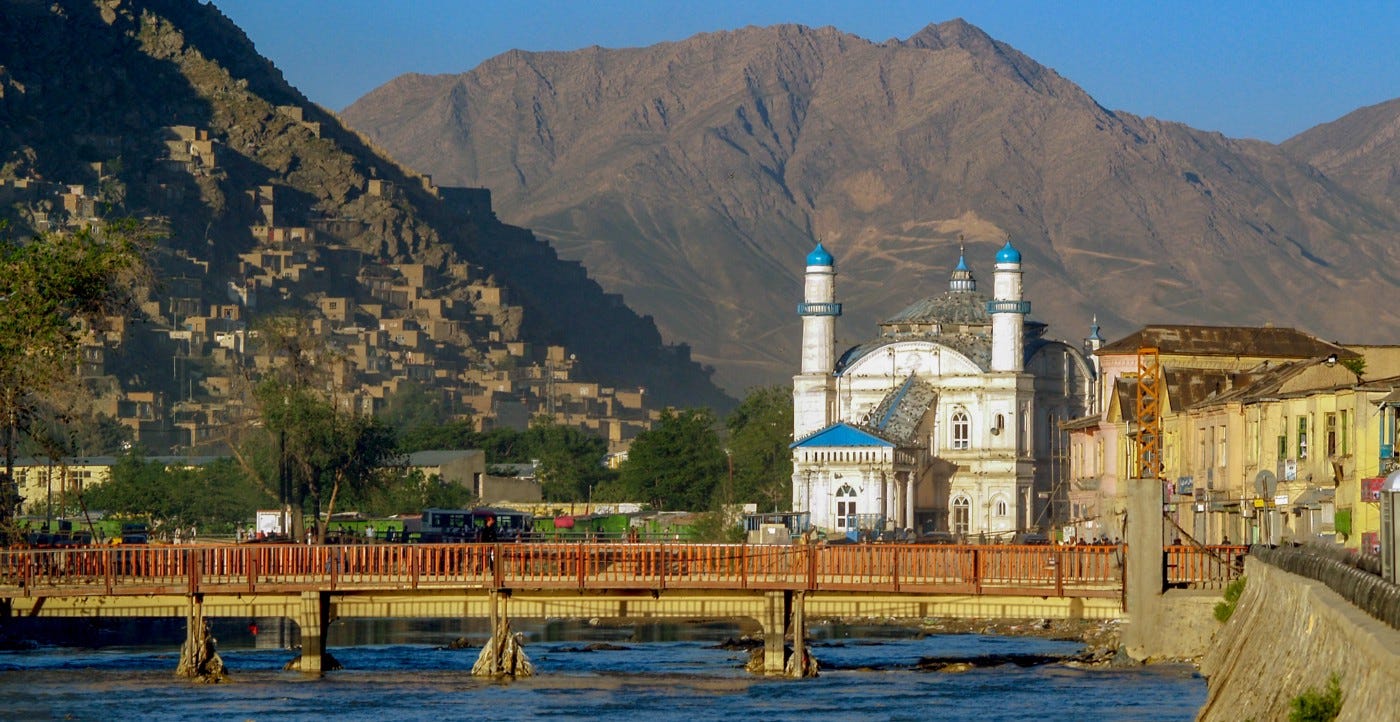
According to recorded history, the Afghan struggle against outside forces began with Darius the Great, who pushed into the land to expand the Persian Empire. Two hundred years later Alexander the Great launched a brutal military campaign into what is now Uzbekistan, Tajikistan, and Afghanistan, where he later made a strategic marriage to a noblewoman from Bactria (now Balkh) in order to maintain authoritarian control of the region. Buddhism was introduced with the rise of the Kushan Empire in the first century, but the religion was subsequently wiped out when the Hephthalites, or White Huns, invaded the territory during the fifth century.
In 1838 the Afghan monarchy embarked upon the First Anglo-Afghan War to fend off invasion by the British. Four years later, as Britain retreated home in defeat, Russia was already in the queue for the next attempt to claim Afghanistan. In order to avoid a dangerous one-up from this adversary, Britain signed the Treaty of Peshawar in 1855, proclaiming supposed territorial respect and friendship between the two countries. The terms also stated that all Afghan foreign policy would be handled by their signing partner. Later on, Russia and Britain signed their own treaty to decide what parts of the country each of them could occupy, but when Afghan King Sher Ali allowed a Russian delegate to travel to Kabul a few years later it all fell apart. Afghanistan’s compliance with Russia’s violation of the terms ultimately led to the Second Anglo-Afghan War.
From here Afghanistan went through a succession of puppet leaders essentially controlled by the British and later the Russians. While this practice of control eventually faded, the country remained subject to Russian influence and dependence until the departure of the last Soviet troops in 1989. There were only eight years between the Russian withdrawal and the definitive rise of the Taliban, and only twelve years between that departure and the arrival of U.S. troops after our country was attacked on September 11, 2001. Going on the offensive was certainly justified, but as Kevin Baker wrote for POLITICO last year, “Unlike nearly all the great powers that have trampled Afghanistan for millennia, the U.S. actually had good reason to be there. We just didn’t have a good reason to stay.”
“Tragic” doesn’t begin to describe the manner in which our country made its own departure last year, or many of the political decisions made in the two years leading up to it. The sudden decision was shockingly myopic and bumbling, resulting in a cruel fallout that will affect lives for decades. During the United States’ occupation, countless numbers of Afghans and Americans were set to work on long humanitarian missions to feed the hungry, give women agency and space in society, provide safe water systems, and more. Afghan interpreters served not only to bridge language gaps, they also aided in negotiations with adversarial groups and often literally saved the lives of American soldiers on the battlefield. Many of us who personally know active and retired military wouldn’t have the ability to have them at our dinner tables and family celebrations if not for the Afghan counterparts with whom they worked while deployed. Several of these loved ones — along with foreign policy experts — have been saying for at least fifteen years that the presence of American people and ideas in Afghanistan had become too interwoven with the new foundations of its society to simply pack up and pull out. A carefully considered exit plan had been in order for a very long time.
Many mistakes were made in the methods used in efforts to rebuild Afghanistan after the U.S. invasion, and the figurative vessel we proposed wasn’t ready to float when August 31st arrived last year. Many men, women, and children were left to face doom on an unfinished structure that our country had stepped in to build, therefore the United States cannot completely abdicate responsibility for its failure.
Over the last year I’ve witnessed some of the psychological damage caused to the human beings who must bear the impossible weight of America’s great mistake. They are families — often with infants and small children — who no longer have easy access to food, reliable electricity, or income. Many have received official notices from the Taliban informing them of their pending executions for cooperating with our country, for saving American lives, for participating in programs run by our government to enable women to become civic leaders, and acting upon their hope for the future.
It would be unfair and unrealistic for me to expect everyone I know to become as involved in this cause as I have. In truth, despite the brave and brilliant coalition members and Afghans I’ve had the honor of getting to know, I wouldn’t wish the weight of my last year on anyone who isn’t willing and completely aware of what these efforts have entailed. The worry over cases who have become people in our lives, the all-nighters, the inbox requests from desperate people we can’t possibly help, the photographs of starving or murdered adults and children… this is only a fraction of what AfghanEvac volunteers have had to face, and it was all avoidable. However, the greater public can do something to help, and that is to support the Afghan Adjustment Act, which was introduced to both houses of Congress a few weeks ago.
While this piece of legislation doesn’t make up for the consequences created by the withdrawal, it does enable a pathway to safety and stability for those vetted partners who have no idea what the next minute will bring, let alone the next day or year. While tens of thousands of our allies have applied for Special Immigrant Visas, most of those who have made it to U.S. soil thus far have done so because they were granted humanitarian parole, which provides two years of temporary safety for people in imminent danger two years. It is not a visa, green card, or path to citizenship, but rather a holding pattern while waiting for such applications to be processed along with a backlog of over 600,000 others. It will take years to get through this backlog, and those who had been lawfully admitted to this country one year ago are currently staring down the possibility of legal uncertainty. The bipartisan bill allows a pathway for these legally temporary residents to seek a permanent place as contributing members of society. The AAA also expands SIV eligibility for Afghans who worked and served alongside U.S. forces, which includes members of the Afghan National Army Special Operations Command, the Afghan Air Force, the Female Tactical Teams of Afghanistan, and the Special Mission Wing of Afghanistan. Certain Afghan family members of U.S. service people and veterans will also have a path to safety and assurance.
As a great power on the world stage, the United States must take public responsibility for its mistakes as well as its triumphs. This country has had some hard lessons in addressing its missteps and their effect on humanity, and this is an important opportunity to prove itself worthy of this position of global leadership. We must do this. It is a debt on which we cannot afford to default.
For more information about the Afghan Adjustment Act, please click here. For more information about advocacy, visit evacuateourallies.org/advocacy.